

Play Africa
Interviewees: Gretchen Wilson-Prangley & Zviko Kanyoka
Interviewer: Giulia Gualtieri
March 2021

zviko kanyoka
I just graduated from the University of Pretoria in architecture and at the end of last year as I was completing my degree, I got in contact with Play Africa and I have been working closely with Gretchen in the Real Play City Challenge project.
I have a passion for co-creating cities and I developed a deep fascination with how that plays out with children. They are usually the most neglected in spaces because people tend to think they don't have much to contribute or they're too young to contribute. It's been really fascinating to learn more about how children can contribute in the process and how it can be valuable for them as well.
I'm Gretchen Wilson-Prangley and I’m the founder and CEO of Play Africa. I believe very strongly in the importance of seeing children as full and complete citizens from birth. Although I don’t have a background as an architect, I think it is fundamental to honour their rights in our built environment, as babies and as young and growing children who have social, emotional, cognitive and physical needs. At a time of rapid urbanisation, including in Africa, cities can play a very important role in creating a positive environment for children’s healthy development. Thus, urban planners, architects, designers, developers, roadmakers, transportation experts, everyone who is creating or sharing public environments can help to build a more child-friendly world that honours the rights and developmental needs of our youngest citizens.
Babies are born into this world imbued by virtue of their existence with full citizenship and dignity, so what must we do as adults today to create a more dignified city and community that honours their rights?
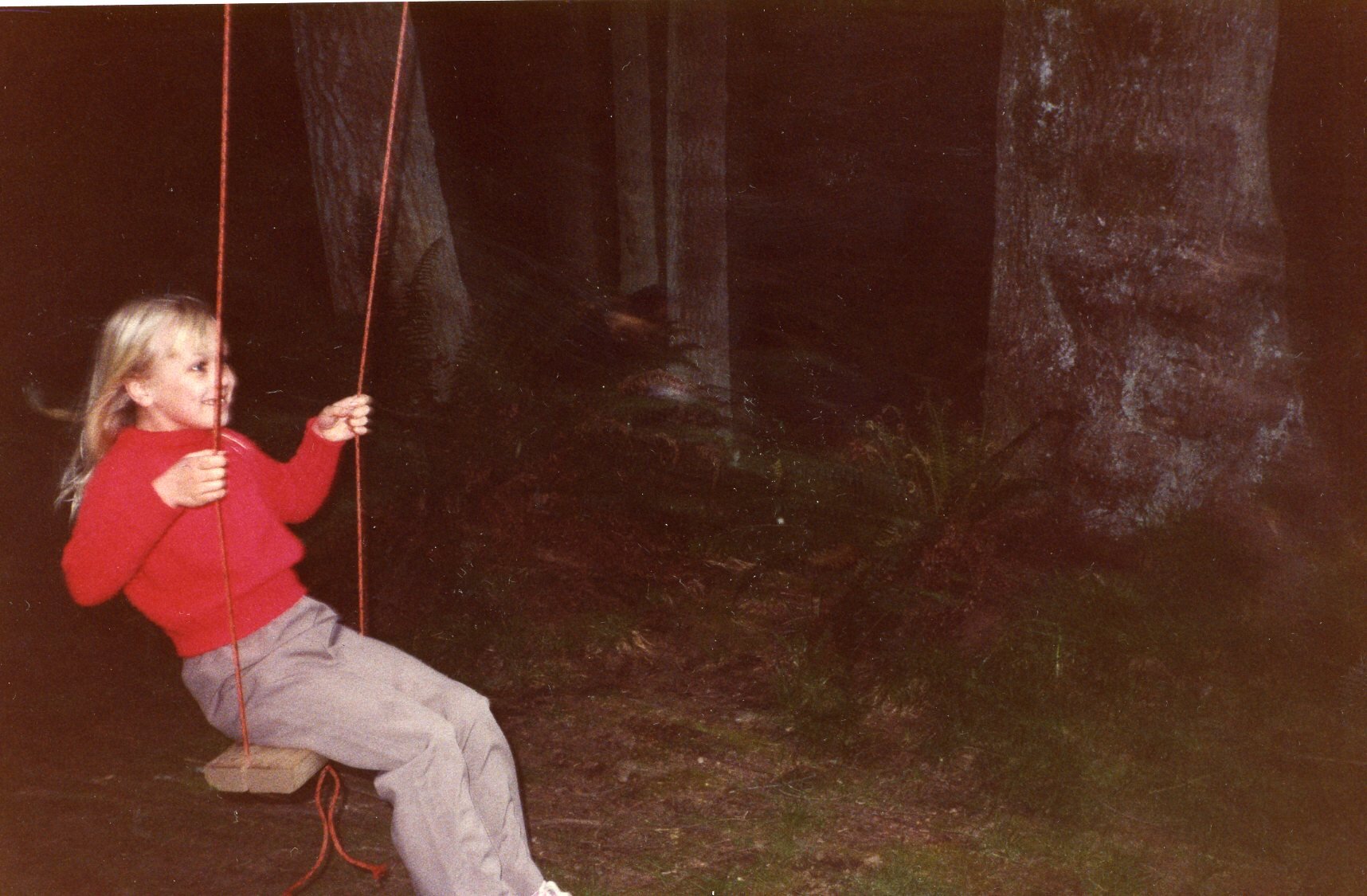
Gretchen Wilson-Prangley and her very happy memories of swinging
«What Play Africa is trying to do is to offer a disruptive counter-narrative to the brutality of spatial inequalities developed over the last several hundred years» Gretchen
What are you fighting for?
In South Africa, we are located in a country in which the built environment was intentionally built to deny the majority of people dignity through colonialism and through apartheid. What Play Africa is trying to do is to offer a disruptive counter-narrative to the brutality of spatial inequalities developed over the last several hundred years. We believe we can help be a catalyst to create more inclusive public spaces that honour the equal value of every person, whether they are babies or 88-year-olds or middle-aged parents. This is fundamental for the work we do at Play Africa.
What is Play Africa?
Gretchen - We are a children's museum operating at the interface of museums, the global cities movement and innovations in playful learning. We are thinking differently about what a public space for creative, playful human connection and learning can be. So we are defying all sorts of ideas of what a museum is. We are not about the past and honouring and holding memories to valorize a past that in South Africa is based on pain and humiliation of the majority of people; we are here to create a museum for the future and for future generations to building empower children to help co-create the future that we're fighting for and constitutional democracy. Thus, we have disrupted the idea that we need to have a fixed building that is very beautiful that only certain people can come into it at certain times, we are bringing our museum to people by transforming the city of Johannesburg into a museum.
We are setting up our Museum not only at Constitution Hill, where we are based. (Constitution Hill is a human rights precinct and home to South Africa’s Constitutional Court, but was once a former military fort and prison.) We are also based on street corners, on rooftops, in community centres, in school halls, in hospital clinics. Wherever children are, we want to be. We do this in a way that models a new kind of public learning environment. So we're doing a lot of exciting work and that's what wakes me up in the morning and what makes me work so hard because I am very passionate about this.

«What Play Africa is trying to push is for children to be the agents of change and we don't see that often enough» Zviko
What is the reality in which children have to navigate in South Africa? What challenges do they face in the built environemnt?
Zviko - From an architectural perspective and with regards to dealing with children's issues, in general, there's a certain belief that experts know better what children need. Even in the built environment when people want to consider child-friendly cities or child-friendly environments, they are more likely to go to other professionals in other fields rather than actually engage children in the process.
What Play Africa is trying to push is for children to be the agents of change and we don't see that often enough. For instance, I want to bring up a project I worked on last year, which was based in Mamelodi and we got into some of the school environments there. We started to see how the urban planning of these spaces was developed with just a ‘check list’ method or attitude. Thus, in terms of the conception of the neighbourhood, you have a school, a clinic and other amenities which are simply placed through a “check-listing” method. They are supposed to aid in children's development and children's well-being but the way in which the spaces are placed is not actually supportive of children's development. For instance, there's also no participation of children in the conception of the designs which means the spaces are designed from an adult’s desires and perception of space. Therefore, they end up either giving better experiences for adults or just missing the mark as it may not necessarily match children’s perceptions or desires.
Looking at this case also from a mobility perspective, children have to travel long distances to get to the schools and these are poor communities where they often have to walk but streets are not designed for walkability. Even the public transport is poor, often being unscheduled and unsafe for their commute. Besides, the school environments are very harsh with hard surfaces that fail to take advantage of opportunities to support their development.
In one of the schools I visited in the township of Mamelodi as well, there was a huge park nearby and it is school property but the school was fenced off directly around the classroom blocks. Hence, children don't have access to those spaces which would probably be good for them in terms of playing and extracurricular activities. I think there's a lot to be interrogated and understood in terms of what makes a space child-friendly and how children are capable of actively contributing to their own development by creatively solving problems they face.

«We contribute to the child-friendly city discourse with a lot of humility considering the incredible amount of work being done and to be honest, I think we are a collection of emerging professionals and thinkers» Gretchen
Who are the passionate people behind the scene of the child-friendly cities in Africa?
Gretchen - When we think about the contribution we want to make within the child-friendly cities discourse or with our participation in the Real Play City Challenge, for instance, it's really about knowledge creation around a uniquely African perspective that we want to share as part of a global conversation. We contribute to the child-friendly city discourse with a lot of humility considering the incredible amount of work being done and to be honest, I think we are a collection of emerging professionals and thinkers. We want to collect some serious voices to bring together as part of a conversation here and in the continent.
Which project are you proud of?
Gretchen - We've done several programs with regards to parks and in collaboration with Johannesburg City Parks and Zoo, the department that oversees all parks in our megacity. The programs that we developed about children was with a school across the street from a big park, Pieter Roos Park, in central Johannesburg. When we did the pilot program, we involved twenty children from the school and the very first time we met, we had planned to go to the park but the kids said: “I can't go to the park! My parents won't let me go to the park!”. So, we started our program by using creative tools for children to think about the park and understand what the park represents for them. What we found is that among those twenty kids, three of them said that they have never been in a park before or they went but when they told their mothers, they got punished because it was a dangerous place for kids to be. Therefore this is the kind of association that children have with the park that is literally across the street from their school. We are really big believers that a space that is naturally open to the public must be accessible and free to be used by anybody.
The approach we use to understand how children perceive and experience public environments consist in talking about their neighbourhood and their feelings they have in relation to it. These are the feelings that they came up with during a workshop: some are neutral like shy or interesting but others are very strong and they represent challenges that they face in the neighbourhood. One of the things that really struck me was to read “human trafficking” or “abuse”, “rape” and “kidnapping” as the most recurrent issues. The second step of this kind of workshop brings children to propose solutions or ideas to tackle the identified challenges. In this case, they let their imagination run by proposing safety robots or machines to safeguard the park and take care of them.

We want to thank Gretchen and Zviko for their passion and activist dedication to promote more inclusive and just cities globally and create more child-friendly environments in South Africa.